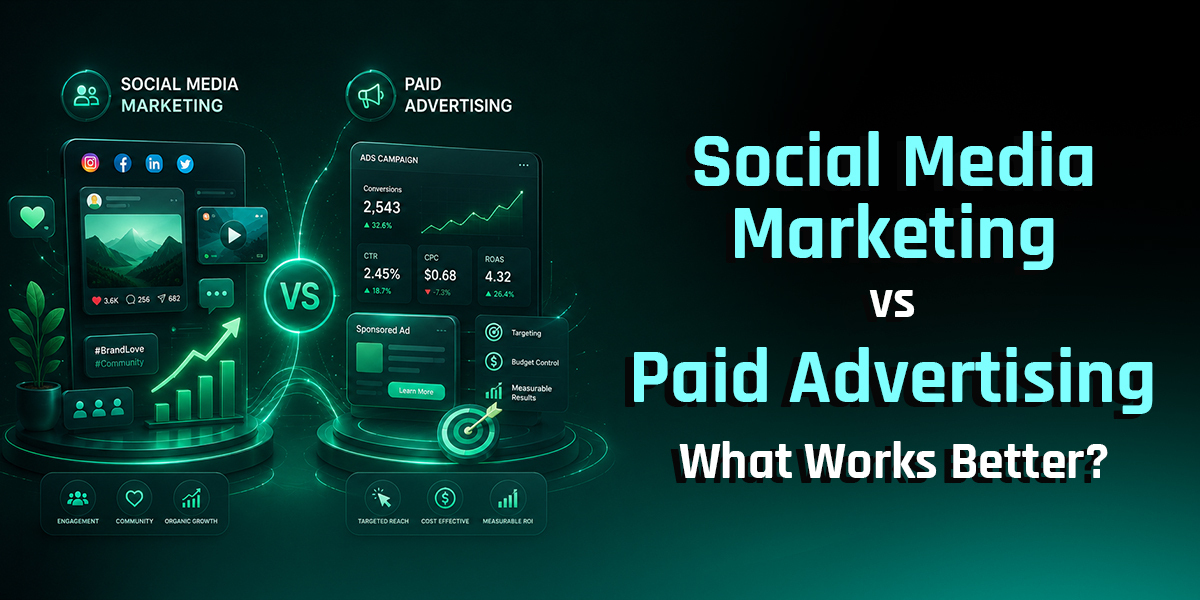
Businesses today have more opportunities than ever to reach their audience online. Among the most commonly used strategies are social media marketing and paid advertising. While both approaches aim to improve visibility, engagement, and conversions, they work in very different ways.
Many businesses struggle to decide which strategy delivers better results. The answer often depends on business goals, target audience, budget, and long-term growth plans. Understanding the strengths of each approach helps businesses make smarter marketing decisions and create more balanced campaigns.
Social media marketing focuses on building brand presence organically through platforms such as Instagram, Facebook, LinkedIn, and X. Businesses use content, engagement, and community interaction to connect with their audience over time.
Unlike paid advertising, social media marketing emphasizes relationship-building rather than immediate conversions. Brands share educational content, videos, stories, and updates to maintain visibility and build trust with followers.
Many digital marketing agencies encourage businesses to maintain an active social presence because consistent engagement improves brand awareness and customer loyalty in the long run.
Paid advertising involves promoting products or services through sponsored campaigns on search engines or social media platforms. Businesses pay to display ads to specific audiences based on demographics, interests, or behavior.
The biggest advantage of paid advertising is speed. Campaigns can generate traffic, leads, or sales almost immediately after launch. This makes paid ads highly effective for businesses looking for quick visibility or short-term campaign performance.
However, paid advertising requires careful budget management and continuous optimization. Without proper targeting and strategy, ad costs can increase quickly without delivering profitable results.
One of the key differences between social media marketing and paid advertising is the timeline of results. Social media marketing is generally a long-term investment that builds audience trust gradually. It helps businesses establish authority, improve customer relationships, and maintain ongoing engagement.
Paid advertising, on the other hand, is designed for faster outcomes. Businesses can launch campaigns and start attracting traffic within hours. This is useful for product launches, seasonal promotions, or lead generation campaigns.
A digital marketing company in India often combines both strategies to balance short-term performance with long-term brand growth.
Social media marketing creates opportunities for direct interaction with audiences. Businesses can respond to comments, answer questions, and participate in conversations, making the brand feel more approachable and authentic.
This interaction strengthens customer trust and encourages loyalty over time. Followers who consistently engage with a brand are more likely to become repeat customers.
Paid advertising usually focuses more on action-oriented goals such as clicks or conversions rather than relationship-building. While ads can increase awareness, they may not create the same level of emotional connection as consistent organic engagement.
Budget is another important factor when comparing these strategies. Social media marketing generally requires more time and creativity than direct advertising spend. Businesses invest in content creation, audience engagement, and consistency rather than paying for every interaction.
Paid advertising delivers faster reach but comes with ongoing costs. Once campaigns stop, visibility often decreases immediately. This makes optimization essential for maintaining profitability.
Businesses involved in website development marketing often use paid ads to drive traffic while using social media to nurture long-term engagement and credibility.
The debate between social media marketing and paid advertising should not always be viewed as choosing one over the other. In many cases, the most effective strategy combines both approaches.
Social media marketing builds trust, audience loyalty, and long-term visibility, while paid advertising accelerates traffic and lead generation. Together, they create a more balanced digital marketing strategy that supports both immediate goals and sustainable growth.
For example, businesses can use paid campaigns to attract new visitors and then use social media content to continue engaging those users after the initial interaction.
Rather than asking which strategy works better overall, businesses should focus on which approach aligns with their objectives. Companies looking for fast lead generation may benefit more from paid campaigns, while those focused on brand authority may prioritize organic social media growth.
The most successful brands understand that marketing works best when different channels support each other instead of competing against one another. A strong strategy combines visibility, engagement, and conversion-focused tactics into one connected system.
By understanding the strengths of both social media marketing and paid advertising, businesses can make informed decisions that support long-term digital success.


© 2023 Copyright damnZgood. All Rights Reserved.




.png)
