
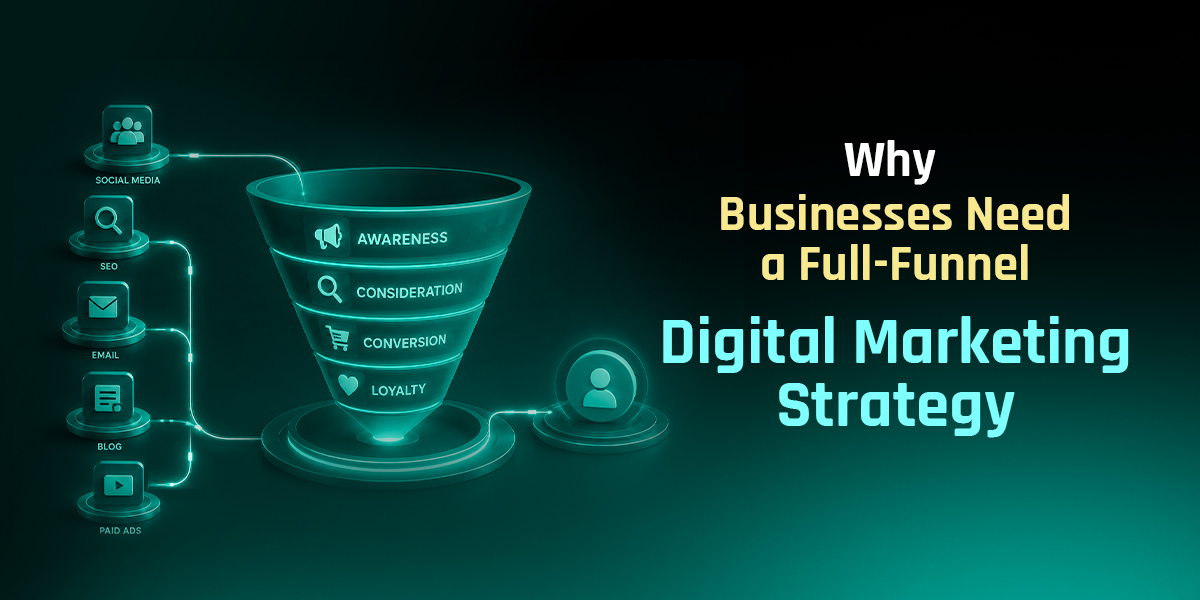
In today’s competitive digital landscape, attracting customers requires more than running advertisements or posting content on social media. Businesses need a complete approach that guides potential customers from their first interaction with a brand to the final purchase decision. This is where a full-funnel digital marketing strategy becomes important.
A full-funnel approach focuses on every stage of the customer journey, including awareness, consideration, conversion, and retention. Instead of targeting customers only when they are ready to buy, businesses can build relationships and create value throughout the entire decision-making process.
A digital marketing funnel represents the different stages customers go through before making a purchase. At the top of the funnel, people become aware of a brand or solution. In the middle, they research and compare options. At the bottom, they make purchasing decisions.
Many businesses focus heavily on conversions but ignore the earlier stages that influence buying decisions. A full-funnel strategy ensures that customers receive the right message at the right time.
By understanding customer behavior, businesses can create targeted campaigns that support every stage of the journey rather than relying on a single marketing channel.
The first stage of the funnel is about attracting attention and introducing potential customers to a brand. At this stage, people may not be ready to purchase but are looking for information, solutions, or inspiration.
Content marketing, social media campaigns, videos, and educational resources help businesses increase visibility and create brand recognition.
Many digital marketing agencies use awareness-focused strategies to help brands reach new audiences and build a strong foundation before focusing on direct conversions.
Once customers become aware of a brand, they move into the consideration stage. Here, they compare options, evaluate solutions, and look for reasons to choose one business over another.
This stage requires content that builds trust and provides useful information. Case studies, reviews, comparison guides, and informative resources help customers understand the value a business offers.
A digital marketing company in India often creates strategies that support this stage by combining content, social proof, and targeted campaigns to influence customer decisions.
The conversion stage is where potential customers take action, such as making a purchase, requesting a consultation, or contacting a business. However, successful conversions depend on the work done in previous stages.
Businesses need optimized landing pages, clear messaging, strong calls-to-action, and a smooth user experience to reduce barriers during the decision process.
This is where website development marketing plays an important role. A well-designed website supports conversions by making it easier for users to find information, trust the brand, and complete desired actions.
A full-funnel strategy does not end after a customer makes a purchase. Retention is a crucial stage because existing customers often provide long-term business value.
Email campaigns, personalized communication, loyalty programs, and ongoing engagement help businesses maintain relationships with customers.
Focusing on retention allows businesses to increase customer lifetime value and create stronger brand loyalty instead of constantly depending only on new customer acquisition.
One of the biggest advantages of a full-funnel approach is better coordination between different marketing activities. Instead of running disconnected campaigns, businesses can create a connected system where every channel supports the customer journey.
For example, social media may introduce a customer to a brand, content may educate them, paid campaigns may encourage action, and email marketing may maintain the relationship.
A complete strategy allows businesses to understand what works at each stage and improve their overall marketing performance.
Modern customers interact with brands across multiple platforms before making decisions. A business that only focuses on immediate sales may miss valuable opportunities to build trust and influence customer choices.
A full-funnel digital marketing strategy helps businesses create meaningful experiences throughout the customer journey. It combines awareness, engagement, conversion, and retention into one connected approach.
By focusing on long-term relationships instead of short-term results, businesses can improve customer loyalty, increase efficiency, and create sustainable growth in an increasingly competitive digital environment.


© 2023 Copyright damnZgood. All Rights Reserved.




.png)
