Search engine optimization has evolved significantly over the years. Earlier, ranking on search engines often depended on repeating exact keywords multiple times within a webpage. While keywords still play an important role, modern search engines have become much smarter in understanding context, meaning, and relationships between topics.
Today, SEO success is driven more by semantic connections than by exact keyword matching. Search engines now analyze how concepts relate to each other, helping them deliver more accurate and relevant results to users. Businesses that understand this shift can build stronger content strategies and achieve better long-term visibility online.
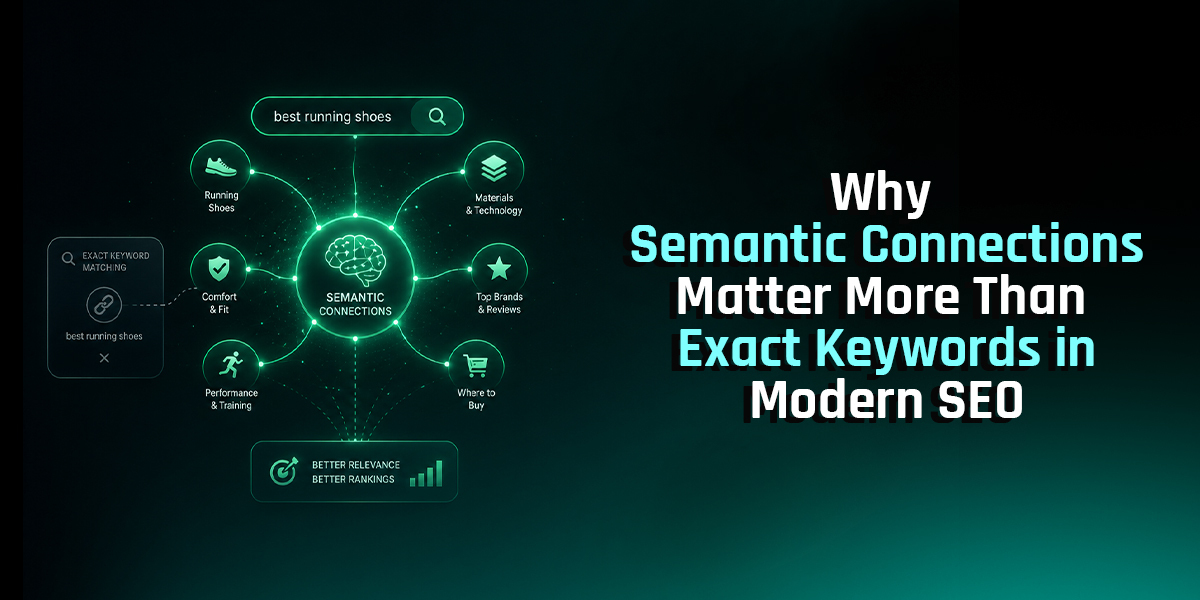
Semantic SEO focuses on the meaning behind content rather than simply targeting individual keywords. Instead of relying on exact phrases repeatedly, this approach helps search engines understand the broader context of a topic.
For example, a page discussing online growth strategies may naturally include related terms such as SEO, paid advertising, website optimization, and content marketing. Search engines recognize these relationships and use them to determine the depth and relevance of the content.
This shift encourages businesses to create informative and connected content that addresses complete user intent rather than isolated keyword targets.
Search engines now use advanced AI systems to interpret user behavior, search intent, and topic relevance. This means pages can rank for related searches even if they do not contain exact keyword matches.
Overusing exact keywords can actually reduce content quality and negatively impact user experience. Modern SEO prioritizes natural language, readability, and value-driven information over repetitive optimization tactics.
Businesses involved in digital marketing and website development must focus on creating meaningful content structures instead of relying solely on keyword density strategies that no longer align with modern search algorithms.
Semantic connections help search engines understand how different topics relate to one another. When content includes supporting concepts, related questions, and contextual information, it signals topical depth and expertise.
For example, a blog about ecommerce growth may discuss user experience, conversion optimization, content strategy, and customer retention alongside the main topic. This creates stronger semantic relevance and improves the overall authority of the page.
An ecommerce digital marketing agency that builds content around connected topics rather than isolated keywords is more likely to achieve sustainable search visibility and stronger organic performance.
Search intent has become one of the most important ranking factors in modern SEO. Instead of asking “Which keyword should I target?” businesses should ask “What information is the user actually looking for?”
Semantic SEO aligns closely with this idea because it focuses on delivering complete answers rather than fragmented keyword-focused content. Search engines reward pages that satisfy user intent comprehensively and naturally.
This means businesses should structure content around user needs, related subtopics, and practical insights instead of trying to force exact-match phrases into every paragraph.
Topical authority is created when a website consistently publishes content around related subjects. Semantic connections strengthen this authority by helping search engines understand the depth of expertise across multiple pages.
Internal linking, topic clusters, and supporting articles all contribute to stronger semantic relationships. Instead of treating each blog as separate, businesses should create interconnected content ecosystems that reinforce key themes.
Using relevant digital marketing tools can help identify related queries, topic gaps, and semantic opportunities that improve overall content strategy and search visibility.
One of the biggest advantages of semantic SEO is sustainability. Exact keyword trends may change over time, but high-quality contextual content continues to remain relevant.
As search engines become more AI-driven, websites that focus on meaning, expertise, and user value will perform better than those relying on outdated keyword tactics. Semantic SEO also improves user engagement because content feels more natural, informative, and easier to read.
Businesses that invest in semantic relevance are better prepared for future algorithm updates and evolving search behaviors.
Modern SEO is no longer about repeating exact phrases to manipulate rankings. Search engines now prioritize semantic understanding, contextual relevance, and user-focused content experiences.
By building semantic connections between topics, businesses can improve search visibility, strengthen topical authority, and create more meaningful experiences for users. The future of SEO belongs to websites that focus on relevance and value rather than outdated keyword repetition.
As digital search continues to evolve, businesses that embrace semantic SEO will be better positioned to achieve long-term organic growth and stronger online authority.


© 2023 Copyright damnZgood. All Rights Reserved.




.png)
